OC E-Glass Fabric 260gsm Satin
OC · FiberTech Supplies
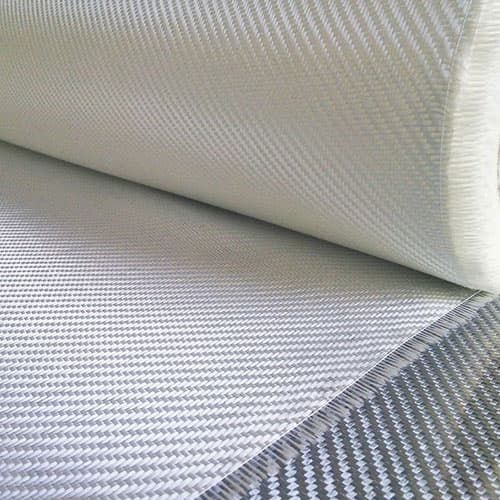
OC E-Glass Fabric 260gsm Satin
Automotive interior
Technical Specifications
| Weight | 260 g/m² |
|---|---|
| Weave Type | Satin |
| Width | 1550 mm |
| Application | Automotive interior |
| Supplier | FiberTech Supplies |
Glass Fiber Fabrics Technical Data Sheet (TDS)
Glass fiber fabrics are woven textile reinforcements made from E-glass continuous filaments. They offer high tensile strength, dimensional stability, chemical resistance, and thermal endurance, making them ideal for structural composites across aerospace, marine, automotive, and construction industries.
Product Overview
| property | value |
|---|---|
| Fabric Types | Plain weave, Twill weave, Satin weave, Unidirectional, Multiaxial (±45°, 0/90°) |
| Glass Type | E-glass (alkali-free); optional S-glass for high-performance |
| Weaving Style Code | e.g. 7628, 2116, 3732, 7781 (per ASTM D579) |
| Weight Range | 25 – 1600 g/m² |
| Yarn Count | EC9, DE75, EC6, EC11, custom options |
Technical Specifications
| property | value |
|---|---|
| Area Weight | 200 – 800 g/m² (typical range) |
| Thickness | 0.08 – 1.2 mm |
| Tensile Strength (Warp) | ≥ 400 N/50 mm (varies by weave) |
| Tensile Strength (Weft) | ≥ 350 N/50 mm |
| Weave Density | 4–24 ends/cm (warp); 3–18 picks/cm (weft) |
| Moisture Content | ≤ 0.1% |
| Loss on Ignition (LOI) | 0.4 – 1.5% |
| Sizing | Silane-based, compatible with UP, VE, EP, PU |
Physical & Mechanical Properties
| property | value |
|---|---|
| Fiber Density | 2.60 g/cm³ |
| Tensile Modulus | ≥ 72 GPa |
| Thermal Conductivity | 1.2 W/m·K |
| Dielectric Constant | ~6.0 @ 1 MHz |
| Working Temperature | -200°C to +550°C |
| Softening Point | 845°C |
| Flame Resistance | Non-combustible (per ASTM E84) |
Weave Styles & Benefits
| property | value |
|---|---|
| Plain Weave | Balanced strength, good stability, low crimp, easy handling |
| Twill Weave | Better drapeability, moderate strength, smoother surface |
| Satin Weave | Excellent drape, high coverage, complex contours |
| Unidirectional | Maximum strength in one direction, ideal for load-bearing |
| Multiaxial | Engineered for complex structural loads (±45°, 0/90°), used in wind, marine, aerospace |
Application Processes
- Wet Lay-Up / Hand Lay-Up
- Resin Transfer Molding (RTM)
- Vacuum Infusion
- Pultrusion (for prepreg-type unidirectionals)
- Prepreg Laminating with hot-melt epoxy or polyester resins
End-Use Applications
- Marine: boat hulls, decks, masts
- Aerospace: radomes, fairings, lightweight panels
- Automotive: hoods, bumpers, structural parts
- Wind Energy: turbine blades, nacelles
- Construction: FRP panels, façade systems
- Electrical: PCB prepregs, cable insulation layers
- Industrial: FRP tanks, pipes, gratings
Storage & Handling
- Store in cool, dry, and shaded environments
- Keep away from moisture, chemical fumes, and direct sunlight
- Recommended temperature: 15–30°C; Relative Humidity: < 65%
- Shelf life: 12 months under proper storage conditions
- Handle rolls with care to avoid edge fraying or fabric distortion
Packaging
- Roll Widths: 1000 mm, 1270 mm, 1550 mm (custom available)
- Core: Paper or PVC inner tube (76 mm ID)
- Packaging: PE film wrap + cardboard box or pallet
- Labels include: Product code, batch number, net weight, production date
Quality Control
All batches of fiberglass fabric are rigorously tested:
- Area weight and weave uniformity
- Yarn tension and warp/weft ratio
- Sizing compatibility with customer resin system
- Dimensional stability and shrinkage under cure
- Flame resistance and dielectric breakdown voltage (if required)
Customized weights, widths, weave types, and resin-compatible sizings are available on request. Contact our technical team for laminate design, sample supply, and performance testing support.